
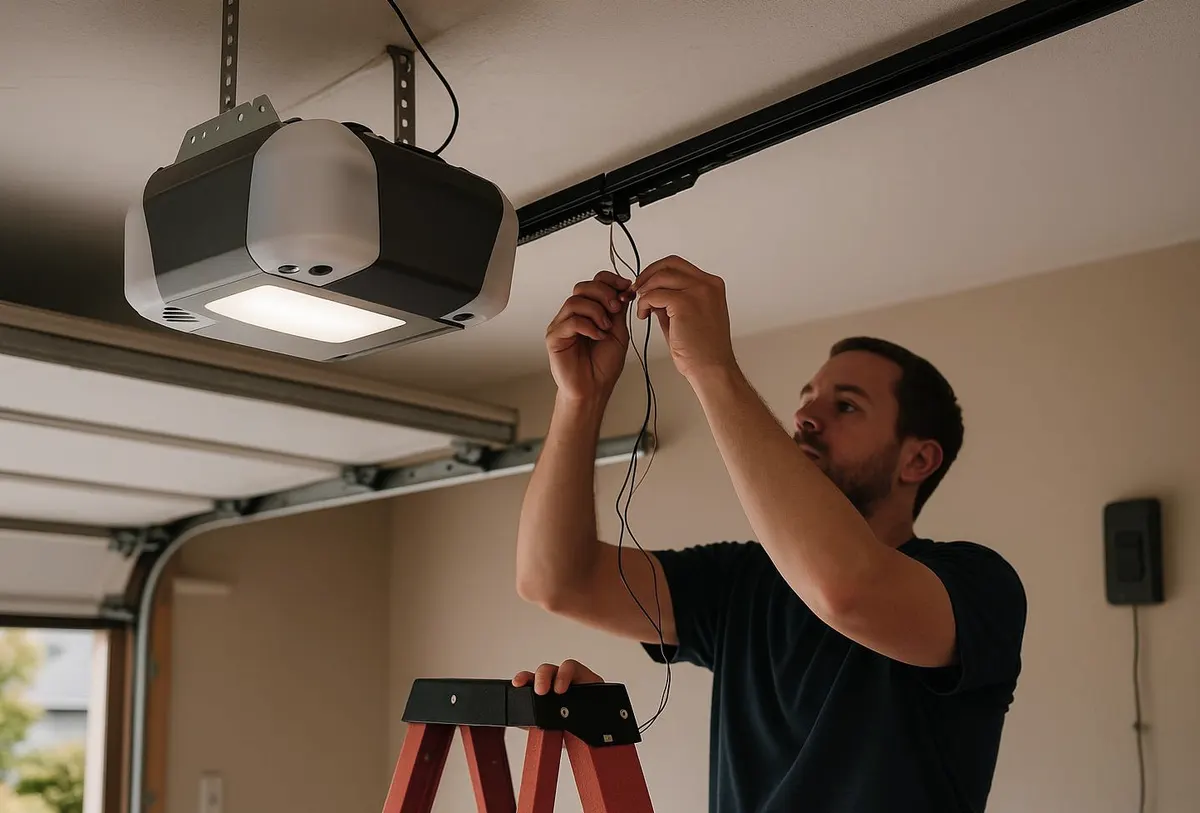
The Mistake Most Homeowners Make First
When a storm watch pops up on the radar, most people go straight for the windows and the lawn furniture. They bring in the patio chairs, maybe tape a window or two, and call it done. It's a tempting shortcut because windows are small, visible, and easy to picture breaking. A garage door, by comparison, looks like the most solid thing on the front of the house — thick panels, a steel frame, a motor holding it shut. Surely that's not going anywhere.
That assumption is exactly backwards. The garage door is usually the largest opening in a home's exterior wall, and in a lot of older or standard-grade installations, it's also the least reinforced. When wind gets behind it, it isn't fighting one small pane of glass — it's fighting a panel that can be 16 feet wide and 7 feet tall.
Why the Garage Door Is the Weakest Wall in the House
Wind doesn't just push on a house from the outside. Once it finds a gap — a door blown in, a broken seal, a panel that flexes too far — it gets inside the garage and starts pressurizing the space from within. That internal pressure pushes up on the roof deck and out on the walls, which is how a single failed garage door can turn into much bigger structural damage during a severe thunderstorm or straight-line wind event.
A few things make garage doors particularly vulnerable:
- Surface area: no other opening in the house takes this much direct wind load.
- Track and roller systems: tracks are fastened to the framing with brackets that can bend or pull loose under repeated gusts, letting the door pop out of the track entirely.
- Panel strength: standard residential doors, especially older steel or non-insulated models, can bow or buckle under sustained pressure, and once one panel fails the rest of the door usually goes with it.
- Springs under load: a door straining against wind puts extra stress on torsion springs that are already doing the work of balancing the door's weight. A spring that's near the end of its lifespan is more likely to snap at the worst possible moment.
This Is the Season for It
Fall in this part of Texas isn't calm. As summer heat breaks, fast-moving cold fronts move through Liberty Hill, Leander, Cedar Park, Georgetown, and the rest of Williamson County, often bringing little warning before wind gusts and hail show up. These aren't slow-building hurricanes you track for a week — they're the kind of storms that go from clear skies to high wind and hail in under an hour. That's exactly why garage door prep needs to happen before storm season gets rolling, not while one is already on the way.
A Real Pre-Storm Checklist
- Check the tracks and brackets. Look for bent rail sections, loose lag screws, or brackets pulling away from the framing. A track that's slightly out of alignment now can separate completely under wind pressure.
- Test the balance. Disconnect the opener and lift the door halfway by hand. It should stay in place. If it drifts up or crashes down, the springs are out of balance and under more strain than they should be — not something you want discovering mid-storm.
- Inspect the panels for existing dents or cracks. Hail damage from a prior storm, even cosmetic, can weaken a panel's structural integrity. A dented section is a likely failure point under wind load.
- Look at the weatherstripping and bottom seal. Worn seals let wind-driven rain in, but more importantly, gaps let wind get a foothold against the door itself.
- Consider a reinforcement or strut kit. Horizontal struts bolted across the back of the panels add rigidity and meaningfully increase the door's wind resistance without replacing the whole unit. This is a reasonable middle step between doing nothing and a full door replacement.
- Check opener backup power. Severe storms in this area often come with power outages. A battery backup on the opener means you're not stuck manually hoisting a heavy door in the rain, and it keeps the auto-reverse safety feature working.
- Lubricate rollers and hinges. Dust and heat buildup from summer can leave moving parts dry and stiff, which adds resistance right when the door needs to move smoothly.
Reinforcement Kit vs. New Door: The Real Trade-off
Strut kits and track reinforcement are a lower-cost way (typically a few hundred dollars in parts and labor, as a general range) to improve an existing door's wind resistance, and they're a reasonable option if the door is otherwise in good shape. But if the door is older, already shows panel damage, or was never a high wind-load model to begin with, reinforcing it only goes so far. A new door built with a wind-rated specification is a bigger investment (often several thousand dollars depending on size, material, and insulation) but it's the only real fix if the existing door is fundamentally undersized for the pressure it's facing.
After the Storm
Once the wind dies down, walk the door before you run it. Look for a track pulled from the wall, a panel that's visibly bowed, or a door that's off-balance and slamming down faster than normal. Running a damaged door, or one with a compromised spring, risks turning a repair into a safety incident.
When to Call Liberty Hill Garage Door
If your door is out of balance, a spring looks stretched or has visible gaps in the coils, or a track has shifted even slightly, that's a call-us situation rather than a DIY one — springs are under extreme tension and tracks need precise alignment. Our Maintenance & Tune-Ups service covers exactly the pre-storm checklist above, done right the first time, and our Emergency Garage Door Service is there if a storm catches you off guard and the door won't close or comes off its track in the middle of the night.
If you're in Liberty Hill, Leander, Cedar Park, Georgetown, Round Rock, Burnet, Bertram, or Florence and want your garage door checked before the next front rolls through, call Liberty Hill Garage Door today.